

Explore Past Issues of the Flourish Newsletter by Dr Josie McLean
Flourish is where reflective leadership meets practical wisdom. Inspired by the call to see clearly, act wisely and change human systems, each issue invites deeper understanding and courageous action in a complex world.
Welcome to the Flourish newsletter archive; an evolving collection of reflections, stories and insights from Dr Josie McLean.
Each edition of Flourish invites readers to pause, see clearly, and act wisely amid the complexity of today’s world. Drawing from systems thinking, adaptive leadership and years of coaching experience, Josie explores how individuals and organisations can evolve with greater awareness, compassion and courage.
Here, you’ll find essays on the art of change, leadership in uncertainty, and the human side of transformation, how culture, mindset and purpose shape the way we respond to challenge. You’ll also find practical reflections from Josie’s work with leaders across government, business and community, each issue designed to help you notice patterns, shift perspectives and nurture the conditions for thriving.
Whether you’re revisiting an earlier edition or discovering Flourish for the first time, these newsletters offer a steady companion for your leadership journey. They’re written for those seeking to cultivate wisdom in action, to make sense of complexity, and to spark meaningful change from wherever they stand.
Browse through the archive below to read previous editions. To receive new issues straight to your inbox, subscribe to Flourish and stay connected with fresh ideas, stories and practical ways to change human systems, naturally.

“We Don’t Have Time”
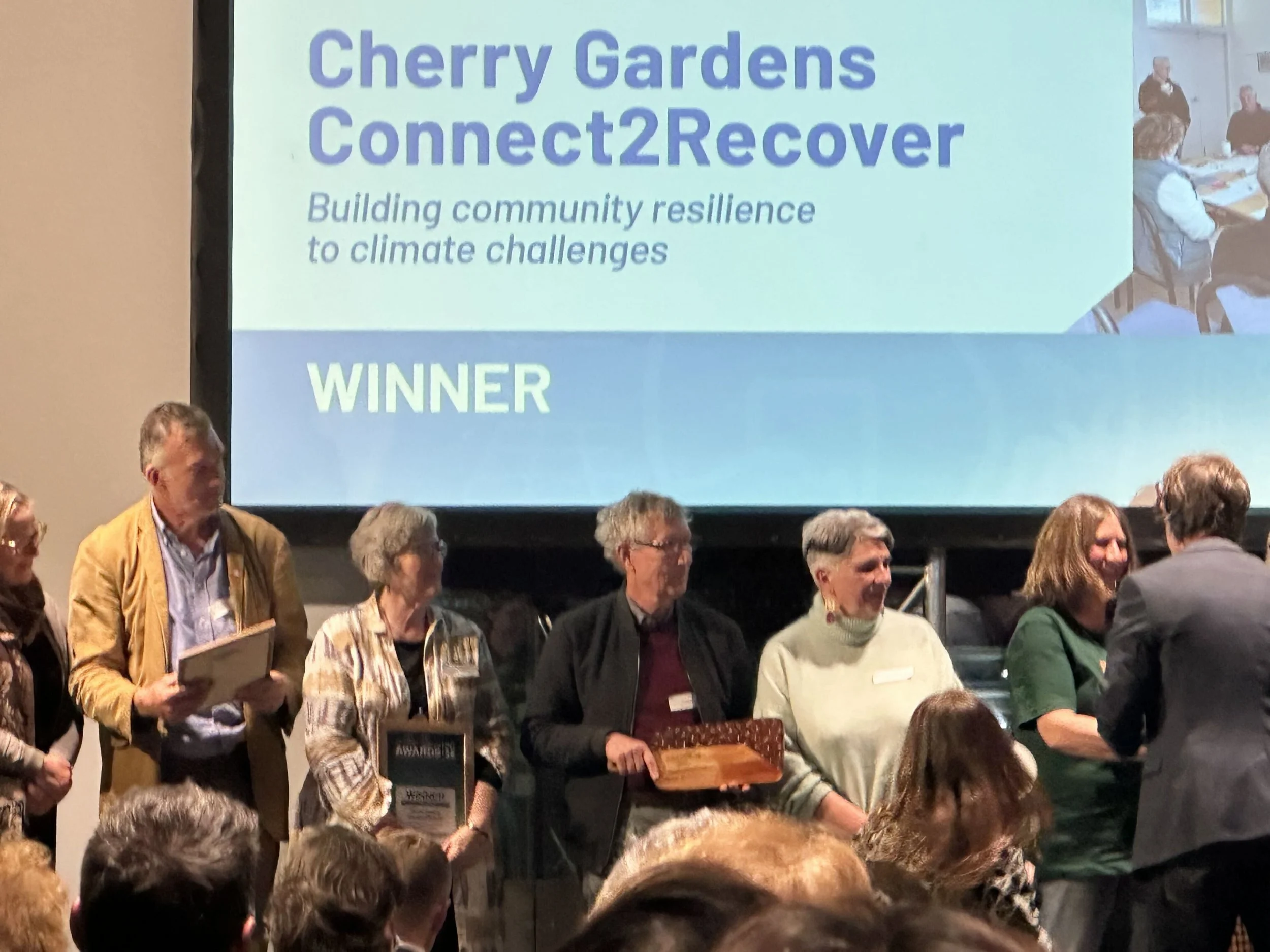
Working emergently brings people alive

Developing Sustainability Teams for Climate Leadership
Roadmaps Are for Machines but a Sense of Direction is for Living Systems

When the toolkit doesn’t match the territory

Systemic Change: Our Times Require New Ways, Not Working Harder
If you've just watched your climate action plan or landscape strategic plan, that you laboured over for months, become irrelevant because priorities changed again or maybe staff are continuing on in their old patterns of work – that’s not a failure - it's a signal.

Being a good ancestor
Can you feel the world changing around you? How can you respond?
So many people I come into daily contact with are quietly disturbed. Slightly uncomfortable. Some can identify their discomfort, and others can’t. But most of us can feel something like tectonic plates shifting underneath our daily way of life.
My local community is coming together to develop a Disaster Recovery plan – something that I can’t remember previous generations doing. But it feels necessary today.
I wonder what you are noticing in your life?

Why and how do we ‘see systems’?
Learning to see systems allows us to perceive and understand the world differently to how we’ve been taught throughout our lives. Those of us raised in a modern Western society are traditionally taught to perceive the world through the lens of a paradigm sometimes called the Newtonian, or Scientific paradigm. It’s a paradigm that emerged from a belief that the universe is a clock and that God is the omniscient clockmaker.
Applying the Newtonian paradigm to machines like clocks is entirely appropriate. If a machine isn’t working, we take it apart, fix or replace the parts that are malfunctioning, then put it back together and it will return to its intended function.
Who’s calling the shots?
Are you a team leader who wonders who is calling the shots? Or maybe, you have been trying to deliver a program of work for a while but have not made much progress due to your own staff's 'resistance'. In the midst of all this, I've recently witnessed three teams and their executive managers, where the one-up leader struggles with conflict, and therefore, providing clear direction and feedback has added to the confusion by reinforcing an avoidant culture.
I take a systemic perspective of all events in my work and in these recent examples, it's been really difficult to tease out what is happening and how to influence it. Here are some ideas that may help you find your way forward. I think the truth is that we are all affected by these dynamics, whether we are aware of them or not. The sources of the challenging situation are entangled and unclear.

Purposeful Cultures: Discovery Circles - The Story of Why
If you've been following me on social media, or through my newsletters recently, you've probably seen a mention or two of Purposeful Cultures: Discovery Circles. This is a self-leadership program designed to guide your team though a series of transformative conversations, evolving your culture from the inside out. It has been designed to be delivered by those within the team or organisation, giving ownership of the process to the people who are undertaking it.

Moving into the Unknown
Last week I participated in an interview with a coach based in Europe about my work as a coach and facilitator in the fields of climate and ecological emergency.
When asked about how I started in my particular line of work, I was reflecting on the epiphany I had back in 2003 (which some of you may be aware of) - that humanity was on a trajectory to possible self-destruction, which prompted me to ask myself:
“What do I need to learn and how do I need to change my business to earn a living and contribute to solutions rather than problems?”
As I was answering the questions for the interview, I paused and realised for the first time that I have succeeded in finding some answers to that question.

Building Trust: A CEO’s Masterclass
Trust is such a huge, subtle thing, and if you spend any time at all on one of the various 'socials', you will probably witness declining trust in real-time.
Trust is measured worldwide too. One of the most widely used tools is the World Values Survey, and it indicates that as of 2022, 49% of Australians generally agree that most people can be trusted! I was surprised by this, but maybe you are not.
Edelman's Trust Barometer suggests that business is generally more trusted than other institutions to introduce innovations to society. Over time, there has been a steady decline in our trust, to the point where it is being described as a crisis of trust.

How can you inspire and mobilise people to thrive through change?
Many organisations are engaging with more and more change. Some is forced upon them by a changing world context and others are choosing to transform themselves to be ready for the future. But with change after change, how can you keep your team energised and committed?
If you’ve ever felt the enthusiasm of your team dwindle amidst the challenges of change, you're not alone. The question is, how can we inspire and mobilise people to not just endure change, but to thrive through it? I am a strong advocate for the transformative approach of Appreciative Inquiry (AI – not artificial intelligence! ).
Collaboration vs Teaming: The Dynamics of Working Together
Collaboration and teaming are often used interchangeably, but each offers a different lens through which to view how we work together effectively. So, what is collaboration, and how does it connect with the concept of teaming in practice for your team?
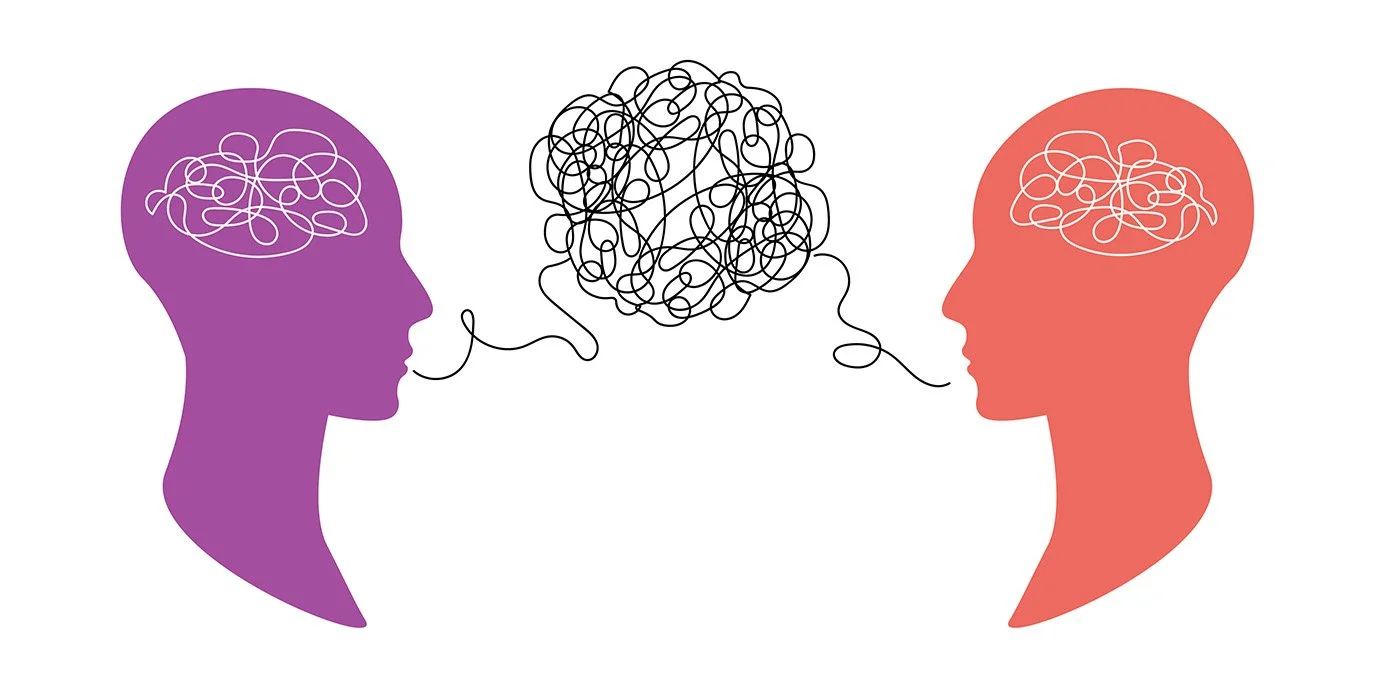
How can we better handle difficult conversations?
Difficult conversations often loom large in our minds, creating anxiety and hesitation. Even procrastination, if we are honest.
But why are these conversations daunting? I spend a large amount of my professional life engaged in difficult conversations with individuals, staff in conflict, and entire teams and groups seeking to address complex challenges together. Here's a little bit about what I have learned. And i am still definitely learning!

How can workplace structures cause "poor behaviour"?
When we see ‘poor behaviour’ in our workplaces (I use inverted commas there because it’s subjective, and there’s often more to it – as I’m about to explore), it’s easy to pass off as individual shortcomings. In fact, the invisible designs dictating interactions, workflows, and decision-making processes that shape our organisations play a significant, if silent, role in moulding the behaviour of the people working within them.

Prioritising: The lost art of leadership?
In today's intricate web of leadership challenges, are you finding prioritising to be your Achilles’ heel? It's not just you - many leaders are in the same boat. Let's delve into why prioritising has become a lost art, yet a much-needed capability in the current workplace landscape that seems highly reactive and overwhelmed with systemic burnout.

How can we navigate the emotions of change?
Change is a process that naturally brings up emotional responses. Acknowledging and working through these emotions can be a process of self-discovery, requiring a mix of courage and curiosity to see us through to the other side.
In my work with two organisations in the midst of a large-scale merger, I have witnessed up close how personal change mirrors the complexities faced in organisational transformation. It’s a push-and-pull between the fear of uncertainty and the promise of potential.

How can we engage staff in times of upheavel?
I have recently been working with two organisations in the midst of a large-scale merger. One challenge of this work has been engaging team members from across the two organisations in the ongoing, emergent change of this merger. This is no small feat!
During times of upheaval like this, how can we ensure staff are supported through the change, and even energized by the new possibilities that it might bring?
These are some strategies I’ve employed in my work with these groups.

Have you ever over-harvested your team?
I’ve been holidaying. And like many on holidays, that means I have been reading. I love reading but often don’t have the time that I’d like to devote to it. Or more precisely, I don’t make the time to devote to it.
This past week I have been dipping into Braiding Sweetgrass by Robin Wall Kimmerer in the USA – or Turtle Island as it is known to some indigenous peoples in the USA. Kimmerer is a Potawatomi author and an academic ecologist. The book explores many topics, but a central one is reciprocity. The creation of relationships of symbiosis due to reciprocal benefits. For example, the relationship between sweetgrass and humans. Sweetgrass is respected as the first grass on Turtle Island. In traditional knowledge, there is a saying, “If we use a plant respectfully, it will stay with us and flourish. If we ignore it, it will go away. If you don’t give it respect it will leave us.” This belief runs counter to the commonly held scientific understanding that to conserve a species, we should leave it alone - keep it separate. Nevertheless, Kimmerer describes scientific research informed by traditional knowledge where the findings support the traditional understanding.