
Systemic Change: Our Times Require New Ways, Not Working Harder
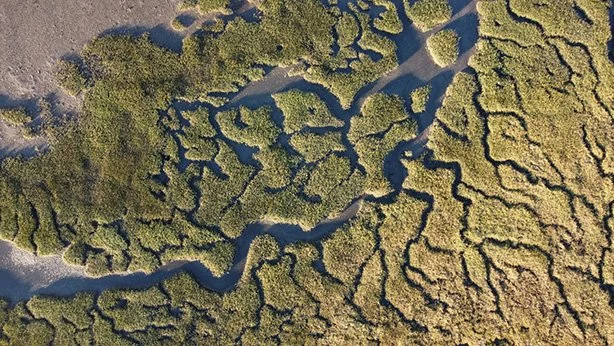
Many diverse ways to reach the sea…
If you've just watched your climate action plan or landscape strategic plan, that you laboured over for months, become irrelevant because priorities changed again or maybe staff are continuing on in their old patterns of work – that’s not a failure - it's a signal. The structural drivers working against you are real: human behaviour based on habits of the past, mandates without resources, short political cycles that reset priorities before projects mature, and scope creep that stretches you. These are standard conditions of practice, not personal shortcomings.
Whether you're in local government carrying a whole-of-society problem on a council spine—from waste and fleet to land-use conflicts and heatwave preparedness - or working in an NRM (Landscape board in SA) navigating competing land use demands, threatened species recovery, and community expectations around water allocation, the pattern is similar. And here's what makes it even harder—many of the tools you were trained to use simply weren't designed for the complexity you're facing.
The Toolkit Problem
We were trained for 'complicated' — where analysis wins. But climate and natural resource management work is 'complex' — where learning wins. Analysis still matters, but it's insufficient on its own. Many tasks genuinely are complicated: emissions inventories, LED rollouts, pest animal control programs, and revegetation sequencing all respond well to careful scoping and measurement. But we also learned strategic planning with linear pathways, stakeholder consultation that over-relies on 'inform and persuade', and change management frameworks designed for predetermined outcomes.
Climate mitigation, adaptation, resilience work and integrated catchment management aren't just complicated. The hardest parts are complex. The difference matters.
In complicated systems, cause and effect are knowable — like assembling a bridge or a wastewater treatment upgrade. In complex systems, cause and effect emerge through interactions and unfold in ways we cannot predict. Think of a rainforest, a catchment system responding to variable rainfall, or a community grappling with drought. The same intervention can produce wildly different results depending on context, timing, and countless interdependencies we can't see.
In complexity, yesterday's best practice becomes tomorrow's unintended consequences. Consider the five-year plan that locks in a single pathway — then a new council, CEO, or state government policy shift resets priorities mid-term and the plan becomes an unhelpful artefact. Or the consultation designed to build consensus by offering a solution, but which inadvertently amplifies polarisation by treating value conflicts as an information deficit—which is why 'sensemaking' methods outperform 'persuasion' methods in high-value-conflict settings. These approaches create an illusion of control that exhausts us when reality refuses to cooperate.
Why This Matters Now
The job has changed faster than the playbook. Climate mitigation, adaptation, and landscape management require us to work with uncertainty rather than against it, to hold multiple possibilities simultaneously, and to learn our way forward rather than plan our way there.
And let's be honest: the scenarios emerging from climate science are increasingly confronting. If you're paying attention — and of course you are — there's an emotional cost. Grief, frustration, and fear are natural responses. How we work with these emotions matters. Pushing them aside doesn't serve us because emotions are part of the transformational change process most of us seek. If we're overstressed, we make poor decisions and often shut down conversations before they start.
This is where complexity science offers a different lens. The complexity goes all the way down to your inner world, too—your decision quality under stress, your conflict reactivity in engagement, your risk tolerance when facing ambiguity. These aren't separate from system outcomes; they shape them.
Your state matters. You are part of the systems we need to change. Inner work is necessary — it's the source of psychological adaptability that flows into better conflict tolerance, clearer prioritisation under ambiguity, and less reactive stakeholder engagement. But inner work must be paired with changes in governance, incentives, and practice. For the system to change, we must change; then we're ready to gain the most from new approaches being developed to match the territory's complexity.
Three Approaches Worth Exploring
Adaptive Leadership shifts focus from having answers to creating conditions where people can do adaptive work together. Developed by Ronald Heifetz and colleagues at Harvard, this framework helps distinguish between technical problems you can solve with expertise and adaptive challenges requiring collective learning. When a community needs to fundamentally rethink its relationship with water or land use, that's adaptive work.
Estuarine Mapping, developed by Dave Snowden and colleagues at The Cynefin Company, uses the metaphor of an estuary — where fresh and salt water mingle uncertainly, and a rich, diverse ecology emerges. The process begins by guiding groups to develop a shared understanding of the system and the elements they can influence. The next step involves the group in creating an iterative series of safe-to-fail actions to learn what works to shift conditions and the system in the desired direction.
Scenarios aren't about predicting the future — they're about preparing for multiple futures. Applied strategic foresight includes environmental scanning to detect weak signals of change, trend analysis that distinguishes between megatrends and emerging patterns, and structured methods for developing alternative futures. For landscape boards, this might mean testing regional land management strategies against multiple climate and policy trajectories, or stress-testing biodiversity corridor planning under deep uncertainty.
An Invitation
I'm running a development program starting July 2026 for sustainability and climate practitioners, landscape board planners, and community engagement staff who want to explore these approaches together. The program runs online over eight months, with monthly group half-day sessions and 1–2 hours of between-session reading and practice designed to fit around existing workloads and deliver 'learning by doing'.
Not more effort — rather, better fit for purpose. Clearer state. Better tools. Less thrash. Better decisions with fewer rework cycles.
To find out more about this program, you can sign up for the free information webinar on Friday 29th May.
If you're tired of pushing harder against challenges that seem to push back, perhaps it's time to try something new.